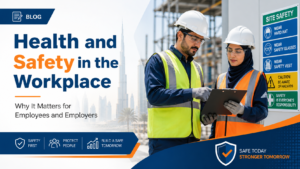
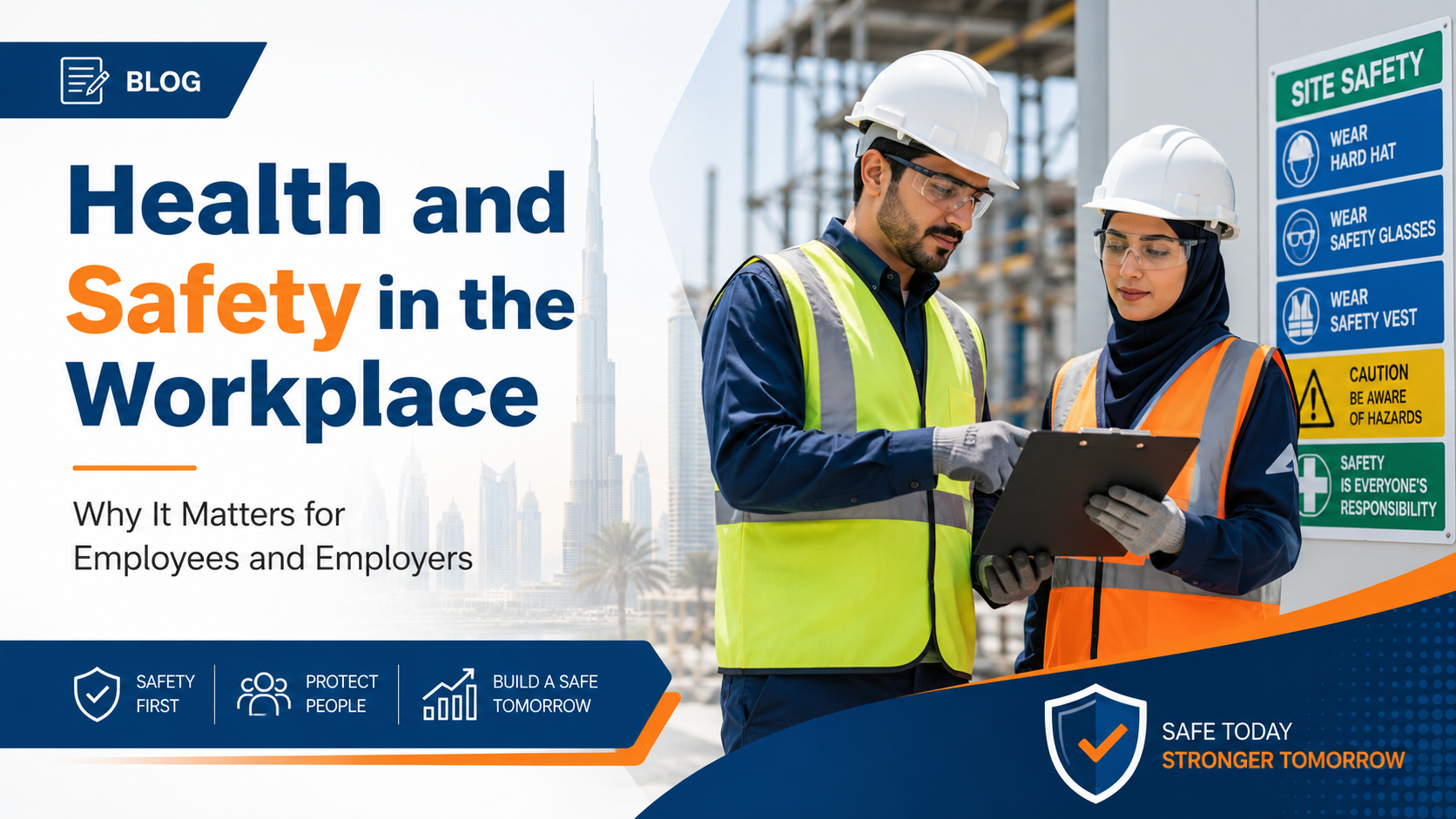
Health and Safety in the Workplace: Why It Matters for Every Business
Health and safety in the workplace is important for every company. It protects employees, visitors, contractors, and the business itself. A safe workplace reduces accidents, improves worker confidence, and supports legal compliance.
Every employer has a responsibility to provide a safe working environment. Employees also have a duty to follow safety rules, use equipment correctly, and report unsafe conditions. When both employers and workers cooperate, the workplace becomes safer and more productive.
What Is Health and Safety in the Workplace?
Health and safety in the workplace means controlling risks that may harm people during work activities. These risks may come from machines, chemicals, electricity, lifting operations, working at height, fire, poor housekeeping, unsafe behaviour, or lack of training.
A good health and safety system helps a company identify hazards, assess risks, and apply suitable control measures. This can prevent injuries, illness, property damage, and business losses.
Why Health and Safety Is Important
Workplace accidents can cause serious harm. They can lead to injuries, medical costs, work delays, legal action, and damage to company reputation. Therefore, every business should take health and safety seriously.
Health and safety is important because it helps to:
- Protect employees from injury and illness
- Reduce workplace accidents and incidents
- Improve legal and regulatory compliance
- Increase employee confidence and morale
- Reduce downtime and business interruption
- Improve company image and client trust
- Build a strong safety culture
Common Workplace Hazards
Every workplace has hazards. Some hazards are easy to see, while others need proper inspection and risk assessment.
Common workplace hazards include:
- Slips, trips, and falls
- Unsafe use of tools and equipment
- Poor housekeeping
- Electrical hazards
- Fire hazards
- Manual handling risks
- Working at height
- Confined space hazards
- Chemical exposure
- Heat stress
- Lifting operation hazards
- Lack of personal protective equipment
These hazards can be controlled when companies plan work properly and train employees before starting the job.
Employer Responsibilities
Employers should provide a safe workplace for all employees and visitors. This includes safe systems of work, proper training, suitable equipment, supervision, and emergency arrangements.
Employers should also make sure that risk assessments are completed before high-risk activities. They should provide personal protective equipment when required and check that workers use it correctly.
A strong employer does not wait for accidents to happen. A strong employer prevents accidents before they happen.
Employee Responsibilities
Employees also play an important role in workplace safety. They must follow company safety rules and report unsafe conditions immediately.
Employees should:
- Follow safety instructions
- Attend safety training
- Use PPE correctly
- Report hazards and near misses
- Keep the work area clean
- Use tools and equipment safely
- Avoid shortcuts during work
- Cooperate with supervisors and safety officers
Safety is not only the responsibility of the safety officer. Safety is everyone’s responsibility.
Importance of Health and Safety Training
Training is one of the best ways to prevent accidents. Workers need to understand the hazards related to their job. They also need to know how to control those hazards.
Health and safety training helps workers understand safe work procedures, emergency response, PPE requirements, hazard reporting, and workplace responsibilities.
Training is especially important for high-risk activities such as lifting operations, working at height, confined space entry, hot work, fire safety, first aid, scaffolding, and equipment operation.
Building a Positive Safety Culture
A positive safety culture means that safety becomes part of daily work. It means managers, supervisors, and workers all care about preventing harm.
A good safety culture includes:
- Clear safety communication
- Regular toolbox talks
- Active supervision
- Reporting of near misses
- Proper incident investigation
- Strong leadership commitment
- Continuous improvement
When safety culture is strong, workers feel confident to speak up. They report hazards before accidents happen.
How Hopes Safety Consultancy Can Support Your Business
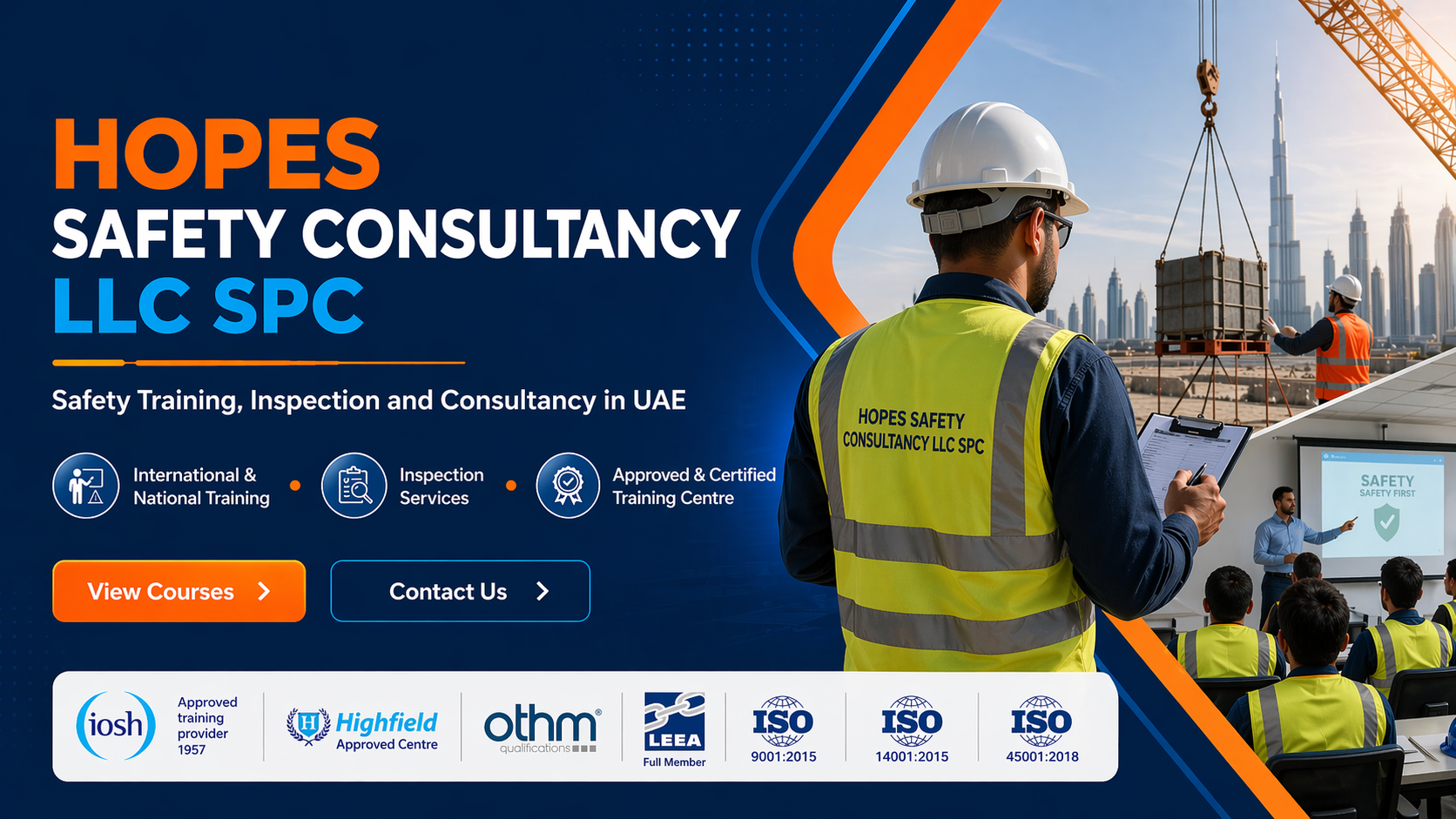
Hopes Safety Consultancy LLC SPC provides health and safety training, HSE consultancy, inspection services, and professional support for companies in the UAE.
Our aim is to help businesses create safer and more compliant workplaces. We support companies through training, guidance, risk control, and workplace safety improvement.
We provide training and consultancy support for different industries, including construction, oil and gas, manufacturing, logistics, facilities management, and general workplace operations.